Data Privacy Is No Longer Optional
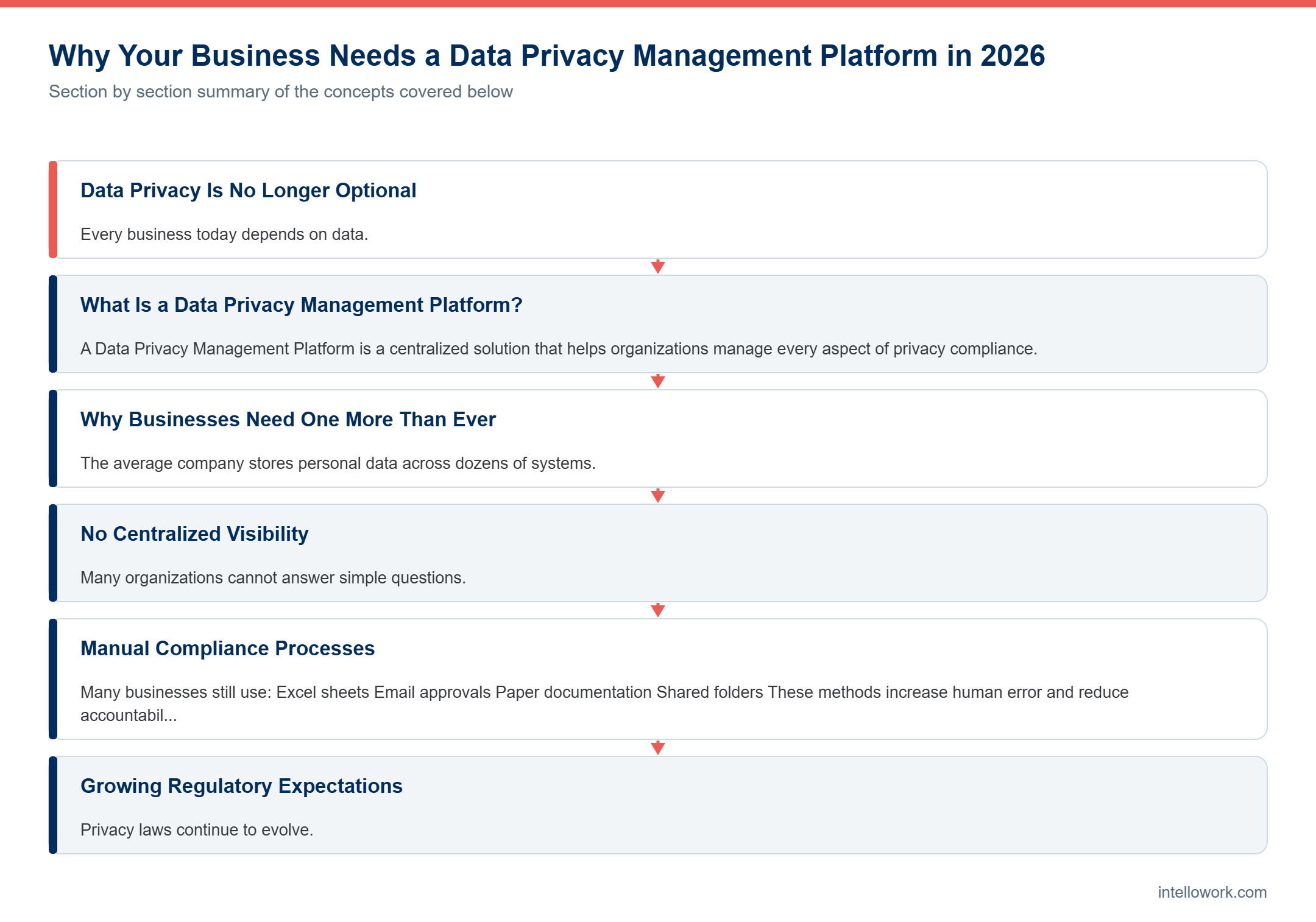
Every business today depends on data.
From customer registrations and employee records to website enquiries and online payments, organizations collect thousands of pieces of personal information every day.
The challenge is not collecting data.
The challenge is protecting it.
With the Digital Personal Data Protection (DPDP) Act, Indian businesses are expected to manage personal data responsibly, maintain transparency, respect user rights, and implement strong governance practices.
Unfortunately, many organizations still rely on spreadsheets, emails, and manual processes to manage compliance.
That approach may have worked in the past.
In 2026, it is no longer enough.
Businesses need a Data Privacy Management Platform that centralizes compliance, automates workflows, and provides continuous visibility into privacy risks.
This is where ProtectComply becomes a strategic business asset.
What Is a Data Privacy Management Platform?
A Data Privacy Management Platform is a centralized solution that helps organizations manage every aspect of privacy compliance.
Instead of using multiple disconnected tools, businesses can monitor, control, and improve their privacy operations from one platform.
A modern platform supports:
- Data privacy governance
- Consent lifecycle management
- DPDP compliance
- Risk assessments
- Audit readiness
- Data Principal request management
- Compliance monitoring
- Privacy documentation
Rather than reacting to compliance issues, organizations can proactively identify and resolve them.
Why Businesses Need One More Than Ever
The average company stores personal data across dozens of systems.
Examples include:
- CRM software
- HR platforms
- Finance applications
- Cloud storage
- Email marketing tools
- Customer support software
- ERP systems
- Mobile applications
As these systems grow, managing privacy manually becomes increasingly difficult.
Without centralized visibility, organizations face:
- Duplicate records
- Missing consent
- Weak governance
- Inconsistent processes
- Higher compliance risks
The Biggest Challenges Businesses Face
No Centralized Visibility
Many organizations cannot answer simple questions.
Where is personal data stored?
Who has access?
How long is it retained?
Has consent been collected?
Without visibility, compliance becomes guesswork.
Manual Compliance Processes
Many businesses still use:
- Excel sheets
- Email approvals
- Paper documentation
- Shared folders
These methods increase human error and reduce accountability.
Growing Regulatory Expectations
Privacy laws continue to evolve.
Businesses need systems that can adapt quickly without rebuilding their compliance program every year.
Customer Expectations
Customers expect businesses to protect their personal information.
Organizations that fail to demonstrate responsible privacy practices may lose customer confidence.
What Features Should a Modern Data Privacy Management Platform Include?
Centralized Privacy Dashboard
Organizations should have one place to monitor privacy activities, compliance status, and ongoing risks.
Consent Management
A robust platform should make it easy to:
- Collect consent
- Store consent records
- Update preferences
- Process consent withdrawals
- Maintain audit trails
Compliance Monitoring
Privacy should be monitored continuously instead of only during annual audits.
Continuous monitoring helps identify risks earlier.
DPDP Gap Assessment
Businesses should regularly compare existing practices against DPDP requirements to identify weaknesses and prioritize improvements.
Data Principal Request Management
The platform should simplify requests related to:
- Data access
- Data correction
- Data deletion
- Consent withdrawal
- Grievance handling
Privacy Governance
Strong governance includes:
- Defined responsibilities
- Approval workflows
- Documentation
- Compliance reporting
Audit Readiness
Organizations should always be prepared to demonstrate their compliance efforts through organized documentation and evidence.
Why Manual Privacy Management Is Failing
Business operations have become too complex for manual compliance.
Every new application, vendor, or business process introduces additional privacy considerations.
Manual systems often lead to:
- Delayed responses
- Missing documentation
- Inconsistent records
- Compliance gaps
- Increased operational costs
Automation is no longer a luxury.
It is a necessity.
How ProtectComply Simplifies Data Privacy Management
ProtectComply is designed to help organizations build a privacy-first business while simplifying DPDP compliance.
The platform enables businesses to manage privacy from one centralized environment.
AI-Powered DPDP Compliance
ProtectComply helps organizations monitor compliance continuously rather than relying on one-time assessments.
Intelligent Consent Management
Track customer consent throughout its lifecycle while maintaining complete transparency.
DPDP Gap Assessments
Identify weaknesses before they become compliance issues.
Compliance Monitoring
Gain ongoing visibility into privacy activities across the organization.
Privacy Governance
Standardize internal privacy workflows and improve accountability.
Audit Readiness
Maintain organized records that support regulatory reviews and internal audits.
Why ProtectComply Is More Than a Compliance Tool
Many platforms simply help businesses store documents.
ProtectComply goes further.
It enables organizations to create a complete privacy management ecosystem.
Businesses can:
- Improve governance
- Strengthen customer trust
- Reduce operational risks
- Automate repetitive compliance activities
- Prepare for evolving regulations
This makes ProtectComply a long-term privacy partner rather than just another software solution.
Industries That Benefit from ProtectComply
Organizations across industries can strengthen privacy operations, including:
- IT & SaaS Companies
- Healthcare Providers
- Financial Institutions
- Manufacturing Businesses
- Educational Institutions
- E-commerce Companies
- Logistics & Supply Chain
- Professional Services Firms
If your business processes personal data, a privacy management platform can improve both compliance and operational efficiency.
Why Businesses Are Investing in Privacy Platforms in 2026
Forward-thinking organizations understand that privacy is becoming a business differentiator.
A strong privacy framework can help:
- Increase customer confidence
- Improve enterprise partnerships
- Reduce compliance costs
- Support business growth
- Strengthen corporate governance
Companies that invest today will be better prepared for tomorrow’s regulatory landscape.
Future-Proof Your Business with ProtectComply
Privacy regulations will continue to evolve.
Customer expectations will continue to rise.
Businesses that rely on outdated processes will struggle to keep pace.
ProtectComply helps organizations prepare for the future with:
- AI-powered privacy management
- Centralized governance
- Intelligent compliance monitoring
- Consent lifecycle management
- Continuous DPDP readiness
Rather than responding to compliance challenges after they occur, businesses can proactively manage privacy every day.
Conclusion
Managing personal data has become one of the most important responsibilities for modern businesses.
The DPDP Act has made privacy a boardroom priority rather than just an IT concern.
Organizations need more than policies and spreadsheets.
They need intelligent systems that simplify governance, automate compliance, and improve visibility.
A Data Privacy Management Platform enables businesses to achieve exactly that.
With AI-powered compliance, structured governance, consent management, and continuous monitoring, ProtectComply helps organizations transform privacy into a competitive advantage.
The businesses that succeed in 2026 will not simply comply with regulations.
They will build trust through responsible data management—and ProtectComply is built to help them achieve it.
Frequently Asked Questions (FAQs)
What is a Data Privacy Management Platform?
A Data Privacy Management Platform helps businesses manage privacy compliance, consent, governance, risk assessments, and regulatory requirements from one centralized system.
Why do businesses need a Data Privacy Management Platform?
It improves visibility, automates compliance tasks, simplifies consent management, and helps organizations meet evolving privacy regulations such as the DPDP Act.
How does ProtectComply help businesses?
ProtectComply provides AI-powered compliance monitoring, DPDP Gap Assessments, consent management, privacy governance, audit readiness, and continuous compliance support.
Is ProtectComply suitable for small businesses?
Yes. ProtectComply is designed for startups, SMEs, and large enterprises that process personal data and want to strengthen their privacy practices.
Can ProtectComply help prepare for DPDP compliance audits?
Yes. ProtectComply supports organizations with centralized documentation, compliance monitoring, governance workflows, and audit-ready records, making DPDP compliance assessments more efficient.
Related reading
- Why Every Business Needs a Consent Management Platform Under the DPDP Act
- Why Every Business Needs a DPDP Consent Management Platform
- DPDP Gap Assessment Platform: Why Every Business Needs ProtectComply Before a Data Breach Happens
Assistants and chatbots fall inside this scope too. Intellowork was built for that reality, with source-level access controls, audit logging and a named residency region, so conversational data does not become a gap in an otherwise sound programme.